

The Multiplier Effect — Inclusion & Culture Transformation
Industry: Technology | Enterprise
Region: Cisco Systems (Fortune 100, 75,000+ employees globally)
Client: Cisco Systems — Country Digital Acceleration (CDA) Program
Engagement: Inclusion & Culture Strategy • Executive Sponsorship Platform Design • Cross-Industry Coalition Building
Timeframe: 2017–present (program still active)

The Challenge
Despite years of investment in diversity and inclusion programs, the technology industry faced a persistent structural problem: the people with the most potential weren’t getting sponsored by the people with the most influence. The numbers told the story — one in five white men had a sponsor, compared to one in eight women and one in twelve minorities. Mentorship programs existed everywhere. What didn’t exist was a system that made sponsorship visible, measurable, and accountable.
Inside Cisco, the executive leadership team had set an ambitious vision for what they called a Conscious Culture — built around environment, characteristics, and experience. But closing the gap between intention and outcome required more than values statements. It required infrastructure: a way to connect leaders to diverse talent, track whether sponsorship was actually happening, and measure whether it was producing results.
The problem had never been willingness. It was architecture.
The Approach
Rather than launching another awareness campaign, the team designed a system.
The Multiplier Effect was built on one deceptively simple ask: every leader pledges to sponsor one extraordinary person different from themselves to the next level of their career — then challenges their peers to do the same. But behind that simple ask was a multi-layered strategy designed to scale across an enterprise and beyond:
Research-grounded design: Cisco conducted a Global Sponsorship Study — 900 professionals across 11 countries, 3 regions, and multiple industries — to understand what sponsors and sponsees actually needed. The findings shaped everything: sponsors wanted proximity, not matching. Sponsees were most often introduced through mutual connections. The best sponsors actively sought out people different from themselves.
A purpose-built platform: The team registered MultiplyDiversity.com, hired a developer, and built a website and app where leaders could take the pledge, access a sponsorship playbook and getting started guide, track their sponsorship relationships, and manage sponsee status over time. It was designed from day one as a white-label product any company could adopt.
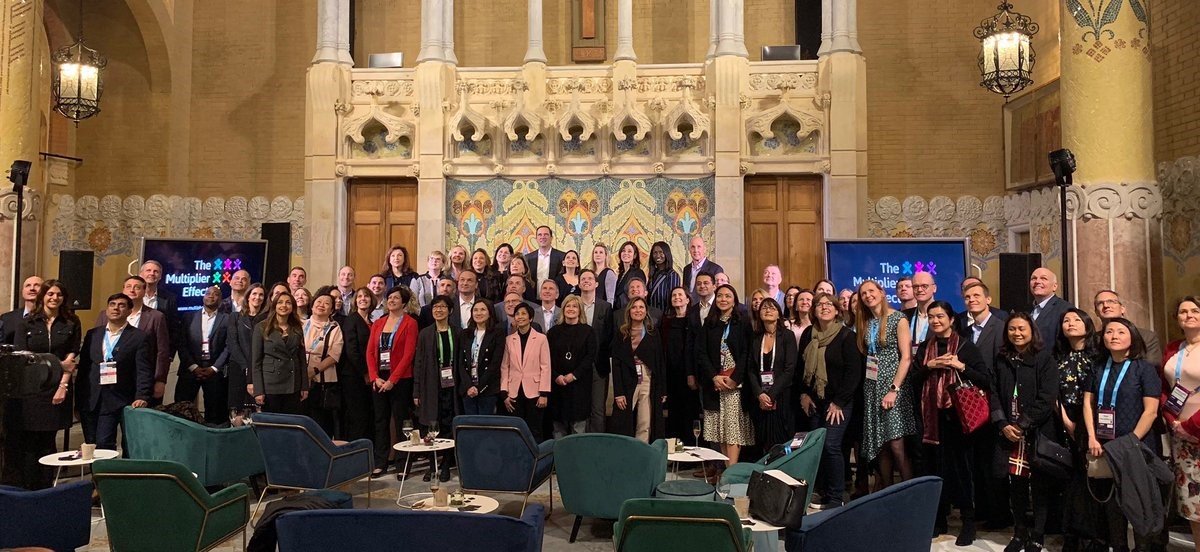
A flagship launch moment: The Multiplier Effect launched at Mobile World Congress in Barcelona in 2017 — produced as a signature event that brought together Cisco CEO Chuck Robbins, women CEOs from across the technology sector, and more than 40 senior leaders who signed the pledge on stage.
Strategic communications and coalition building: The team built a targeted outreach strategy — internally across Cisco’s 75,000 employees and externally through channels including the White House Pay Pledge and an Employers for Pay Equity Consortium of 28 Fortune companies.
Measurement architecture: The program was designed from the start to track the outcomes that matter — not just pledge counts, but promotion velocity, career advancement, retention, pay trajectory, and performance. The insight was that leaders had never lacked good intentions. They lacked data at the moment of decision.
Intellectual partnership: The initiative was grounded in the research of Sylvia Ann Hewlett, economist and founder of the Center for Talent Innovation, whose book Forget a Mentor, Find a Sponsor provided the evidence base. Hewlett spoke at the 2019 MWC event, reinforcing the distinction that became the program’s foundation: a mentor advises, a sponsor advocates.

The Outcome
The Multiplier Effect became one of the most visible and sustained inclusion initiatives in the technology industry:
2,178 sponsors and 3,231 sponsees since launch
100% of Cisco leaders at VP level and above took the pledge in FY23
90% of sponsees were promoted — even though only 9% stated career advancement as their primary goal
70% of sponsees had two or more dimensions of difference from their sponsor
300+ companies across industries adopted the pledge externally
Cisco’s executive leadership team reached 58–62% diverse (gender and ethnicity)
#1 on Fortune’s World’s Best Workplaces (2019) and #2 on Fortune’s Best Places to Work for Diversity
The program is still running today, nearly a decade after launch, embedded into Cisco’s leadership expectations
The broader research validates the approach: sponsored women are 19% more likely to be promoted to executive ranks. Sponsored Black managers are 51% more likely to progress and 108% more likely to stay with their company. Companies where leaders sponsor across difference are 45% more likely to improve market share.
What Timberwilde Did
What the organization had: A CEO committed to inclusion, a 75,000-person global workforce, and a growing awareness that existing mentorship programs weren’t moving the needle fast enough.
What the organization couldn’t see: That the gap between intention and outcome wasn’t a people problem — it was an infrastructure problem. Leaders wanted to sponsor diverse talent. They didn’t have the data, the tools, or the accountability systems to do it consistently and at scale.
What Timberwilde’s co-founder brought: Dawn Galzerano co-created the brand (with Shari Slate, Cisco’s Chief Inclusion and Collaboration Officer), named and registered the domain, produced the flagship launch event at MWC, hired the developer and built the platform, designed the marketing and communications strategy, led cross-company coalition outreach to 28 Fortune companies, and created the playbook and resources that allowed any organization to adopt the model. She built the infrastructure that made inclusion measurable, accountable, and durable.